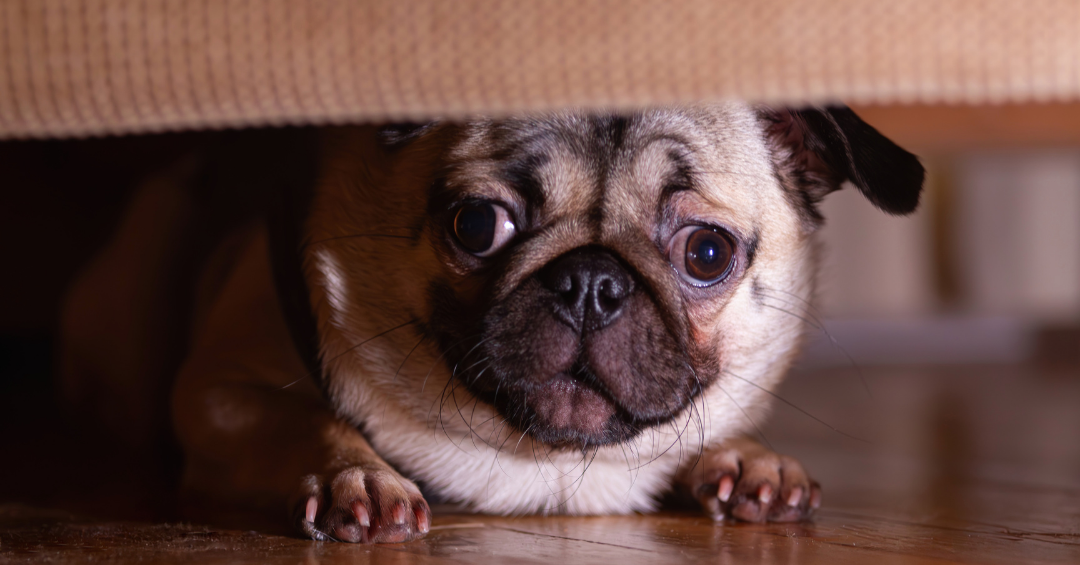

Something changed. Your dog growled at your partner over nothing. Snapped at a kid who got too close. Lunged at another dog on a walk they’ve done a hundred times without issue. And now you’re sitting with a question that feels too big to say out loud: is my dog dangerous?
Take a breath. In 25+ years and more than 6,000 dogs, I can tell you with confidence: aggression almost never comes from nowhere. It feels sudden because you weren’t looking in the right place before — not because your dog broke overnight. There’s a reason, and reasons can be understood, worked with, and in most cases, changed.
This isn’t an article to diagnose your dog from a distance. It’s a framework — the same one I use in every assessment — to help you understand what might be happening, and what to look at first.
First: “sudden” almost always means “finally visible”
Here’s the part most owners get wrong. They think of aggression as a switch that flips. In reality, it’s almost always a threshold that got crossed — the visible tip of something that’s been building for weeks or months.
Think of it like a jar filling with water, drop by drop: a loud house guest here, a startling encounter on a walk there, a sore hip that’s been quietly worse for a month. None of those on their own caused a problem. But the jar was filling. And then one ordinary Tuesday, one more drop — a kid moving too fast, a dog getting too close — and it overflows.
That’s why the trigger you saw is rarely the actual cause. It’s just the drop that made the jar visible. My job in an assessment is to find out what’s been filling the jar.
The six most common causes I actually see
1. Pain or an undiagnosed medical issue
This is the one I check first, every time, no exceptions — and it’s the one most owners rule out too quickly. A dog who suddenly snaps when touched near the hips, won’t let you near their mouth, or growls when picked up isn’t being “difficult.” They’re telling you something hurts. Arthritis, dental disease, ear infections, and neurological issues are some of the most common medical causes of what looks like a personality change.
What it looks like: aggression tied to a specific type of touch or movement (being picked up, having paws handled, being approached while lying down), a recent slowdown in activity, or any change alongside stiffness, limping, or reluctance to jump.
What to do first: a vet visit, before anything else. I won’t build a behavior plan around a dog who’s actually in pain — the plan has to start there.
2. Trigger stacking
This is the “jar filling” idea in its purest form. A vet visit in the morning, a loud thunderstorm in the afternoon, and an overly enthusiastic greeting from a stranger in the evening aren’t three separate incidents for a stressed dog — they’re compounding. By the third one, a dog with plenty of patience left over from any single event has none left at all.
What it looks like: aggression that seems disproportionate to whatever triggered it in the moment, especially after a day that was busy, loud, or unusually social.
What to do first: start tracking the hours before the incident, not just the incident itself. Most owners are surprised by the pattern once they actually write it down.
3. Fear, not dominance
The outdated idea that aggression means a dog is trying to be “the boss” has done real damage — mostly because it leads owners toward corrections that make a fearful dog more afraid, not less. Most aggression I see in consults is rooted in fear: a dog who feels cornered, overwhelmed, or unable to escape a situation, and escalates because nothing else has worked to create space.
What it looks like: stiff body language before the growl or snap, a tucked tail or lowered head, aggression that happens when a dog can’t retreat (on leash, in a hallway, in a crate) rather than in open space.
What to do first: stop, and look at what your dog might be trying to get away from — not what they’re trying to dominate. That single reframe changes almost everything about how you respond next.
4. A genuine trauma or negative association
Sometimes there’s a clear, identifiable event: an off-leash dog rushed your dog at the park, a child grabbed at their face, a vet visit went badly. Dogs generalize fast. One bad experience with a man in a hat can turn into fear of men, or hats, or that specific street corner.
What it looks like: aggression that appeared right after a specific incident, and is now aimed at anything that resembles it — a type of person, a location, a sound.
What to do first: identify the association as specifically as you can. The more precisely we know what your dog is reacting to, the faster we can build a plan around it.
5. Redirected aggression
This one confuses owners the most because it looks completely irrational in the moment. A dog who’s aroused or frustrated by something they can’t reach — another dog on the other side of a fence, a squirrel they can’t chase — will sometimes redirect that intensity onto whoever or whatever is closest. Often that’s another dog in the house, or the person holding the leash.
What it looks like: aggression that erupts during high arousal around something else entirely, aimed at a “safe” target rather than the actual trigger.
What to do first: separate the dogs (or people) involved immediately if this happens in a multi-dog household, and don’t punish the redirected aggression itself — it’s a symptom, not the root cause.
6. Resource guarding
Food, toys, resting spots, or even a person can become something a dog feels the need to protect. This can show up gradually, or seem to appear suddenly once a dog feels a resource is actually being threatened — a new baby reaching for a bowl, a new dog in the house, a toy taken away one too many times.
What it looks like: aggression tied specifically to proximity to an object, location, or person — and calm behavior everywhere else. I’ve written a full breakdown of this pattern specifically, since it’s common enough to deserve its own deep dive.
What to do first: manage the resource (distance, separation) immediately while you get a real assessment — don’t test the boundary to see how bad it is.
What I need to know before I can actually help
When a new client calls me about sudden aggression, these are the questions that matter most:
- When exactly did this start, and was there anything unusual happening around that time — a move, a new pet, a vet visit, a change in routine?
- What does the behavior look like in the exact moment — body language before, during, and after, not just “he snapped”?
- Is it aimed at everyone, or specific people, dogs, or situations?
- Has anything changed physically — appetite, energy, sleep, mobility?
- Has this happened before, even in a smaller way you might not have registered as related at the time?
Notice that none of these questions require me to be standing in your living room. This is exactly the kind of pattern-recognition work that comes through clearly over video — I ask you to walk me through the moments, show me the environment, and describe the body language, and we build the picture together in real time. If you’re wondering whether that actually works as well as in-person, I’ve written about that specifically here: Does Virtual Dog Behavior Consulting Actually Work?
What NOT to do in the meantime
While you’re figuring out next steps, a few things matter more than people expect:
- Don’t punish the growl. A growl is information — it’s your dog telling you they’re at their limit before they escalate further. Punishing it doesn’t remove the discomfort, it just removes the warning.
- Don’t force interactions to “prove” your dog is fine. Repeated exposure without a plan usually makes things worse, not better.
- Don’t wait for a vet visit if pain is even a possibility. Ruling out medical causes first isn’t optional — it’s the foundation everything else gets built on.
- Do start writing things down. Time of day, what happened right before, body language, what you did in response. That log is often the single most useful thing you can bring to an assessment.
Why vets often refer the tricky ones to me
Over 25+ years, I’ve worked with aggression cases aimed at strangers, men specifically, women specifically, children, veterinary staff, other dogs, food, objects, and cases with no obvious pattern at all — aggression that seemed unpredictable even to owners who’d lived with the dog for years.
I’ve worked with a dog who would aggressively attack his own tail, but only during very specific times of day. Tricky, atypical presentations like that are exactly where I do my best work, and it’s a big part of why veterinarians and other animal professionals refer their harder cases to me specifically. If your dog’s aggression doesn’t fit neatly into a category, that’s not a reason to worry you’re on your own with it — it’s exactly the kind of case I want to look at.
The bottom line
“Sudden” aggression almost always has a traceable cause — pain, trigger stacking, fear, a specific trauma, redirected arousal, or resource guarding. The goal isn’t to label your dog as “aggressive” and stop there. It’s to figure out which of these is actually happening, because the plan for a fearful dog looks nothing like the plan for a dog in pain, and neither looks like the plan for resource guarding.
That’s exactly what a Foundational Behavior Session is built to do: a focused, in-depth look at your dog’s specific pattern, so you leave with an actual answer instead of a guess.